
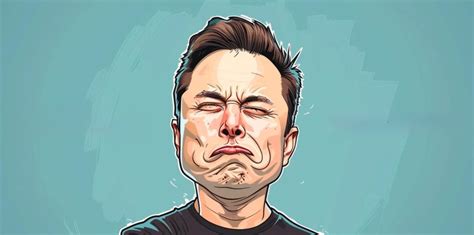
Few names in the world of business and technology spark as much curiosity, admiration, and controversy as Elon Musk. Often described as the real-life Tony Stark, Musk is more than a billionaire entrepreneur; he is a force of disruption who has reshaped industries that were once thought untouchable. From revolutionizing digital payments with PayPal to leading the charge in electric mobility with Tesla, to making space exploration commercially viable through SpaceX, Musk’s journey is one of bold vision, relentless execution, and calculated risk-taking.
This case study takes a closer look at Musk’s entrepreneurial evolution, his leadership style, strategies for innovation, and the lessons his journey offers to today’s entrepreneurs and business leaders.
The Early Spark: Zip2 and PayPal
Elon Musk’s entrepreneurial story began in the mid-1990s, long before he became a household name. After emigrating from South Africa to North America, Musk co-founded Zip2 in 1996, a company that provided online city guides and maps to newspapers. At a time when the internet was still in its infancy, Musk saw the potential of digital navigation. The company was later sold to Compaq for nearly $300 million, giving Musk his first significant financial success.
But his true breakthrough came with X.com, an online payment company he launched in 1999. After a merger, it became PayPal, redefining how money moved online. Musk’s vision for digital payments proved ahead of its time, and when eBay acquired PayPal in 2002 for $1.5 billion, Musk walked away with around $180 million — capital that would seed his next big ventures.
What’s striking here is Musk’s pattern: he doesn’t just start businesses; he enters markets with massive inefficiencies and reimagines them with technology.
Shooting for the Stars: SpaceX
In 2002, Musk founded SpaceX (Space Exploration Technologies) with a daring mission: to make space travel more affordable and ultimately colonize Mars. At the time, this goal sounded almost absurd. The space industry was dominated by government agencies with astronomical costs. Musk poured much of his fortune into SpaceX, risking bankruptcy after three failed rocket launches.
In 2008, with only enough funds left for one last attempt, SpaceX successfully launched the Falcon 1, becoming the first privately-funded liquid-fueled rocket to reach orbit. This milestone secured a NASA contract and validated Musk’s vision.
Today, SpaceX is a cornerstone of modern space exploration. With Falcon 9’s reusability, Starlink’s global internet ambition, and Starship’s Mars mission, Musk has redefined humanity’s relationship with space. His ability to take a near-bankrupt company to a multi-billion-dollar powerhouse illustrates his resilience and appetite for high-stakes risk.
Accelerating the Future: Tesla Motors
If SpaceX was Musk’s dream of the stars, Tesla became his mission on Earth. Joining Tesla Motors in 2004 as an investor and later its CEO, Musk transformed a struggling EV startup into the world’s most valuable carmaker. His goal was simple but revolutionary: accelerate the world’s transition to sustainable energy.
Tesla faced multiple crises — from near-bankruptcy in 2008 to production delays with the Model 3. Musk’s willingness to bet everything, even personally borrowing money to keep Tesla afloat, highlights his fearless approach. Through relentless innovation in battery technology, vertical integration, and direct-to-consumer sales models, Tesla broke the stranglehold of traditional automakers.
The Tesla Model 3 became the best-selling EV worldwide, while the Gigafactories set new standards for scale and efficiency. Tesla is not just a car company — it’s a symbol of the clean energy revolution.
Beyond Cars: SolarCity, Neuralink, and OpenAI
Musk’s ambition stretches across industries:
- SolarCity (2006): Founded by his cousins with Musk’s backing, SolarCity sought to make solar energy mainstream. It was later merged with Tesla to strengthen its clean energy ecosystem.
- Neuralink (2016): A brain-computer interface startup aiming to merge human intelligence with artificial intelligence. Though still in experimental stages, it embodies Musk’s futuristic vision of human enhancement.
- OpenAI (2015): Co-founded by Musk, OpenAI was established to ensure artificial intelligence benefits humanity. Although Musk later distanced himself from the organization, it reflects his deep concerns about AI safety.
These ventures show a clear theme: Musk is not motivated solely by profit but by solving existential problems — from climate change to the risks of artificial intelligence.
The Twitter/X Gamble
In 2022, Musk shocked the world by acquiring Twitter for $44 billion. His vision was to transform the social media platform into X — an “everything app” combining payments, content, and communication. While controversial, the move highlights Musk’s pattern of entering legacy industries (like space, cars, energy) and attempting radical transformation.
The transition has not been smooth. Critics argue that his management decisions have destabilized Twitter’s core functions, while supporters believe Musk is reshaping free speech and digital platforms for the better. Regardless of the outcome, the Twitter/X story underscores Musk’s boldness to experiment, even when it risks his reputation.
Musk’s Leadership Style: Bold, Demanding, and Vision-Driven
Musk’s leadership is often described as intense, visionary, and unforgiving. He sets near-impossible goals, drives teams with relentless energy, and often pushes beyond conventional limits. This style has created both extraordinary results and significant criticism.
- Risk-Taking: Musk invests his personal wealth into ventures others consider impossible. He once had to choose between saving Tesla or SpaceX — and chose both.
- First-Principles Thinking: Musk deconstructs problems to their most fundamental truths, then rebuilds solutions from scratch. This approach allowed Tesla to rethink batteries and SpaceX to cut rocket costs drastically.
- Hands-On Involvement: Musk is known to sleep on factory floors, involve himself in engineering details, and demand the same intensity from his teams.
- Polarizing Communication: His unfiltered tweets and public remarks often spark controversy, moving markets overnight.
Musk is not a conventional leader — he is a transformational one, for better or worse.
Struggles, Failures, and Comebacks
Musk’s journey is riddled with failures that nearly ended his career:
- SpaceX’s three failed launches (2006–2008).
- Tesla’s near-bankruptcy during the 2008 financial crisis.
- Criticism over harsh working conditions at Tesla factories.
- Public and financial backlash after bold claims, like taking Tesla private at $420.
Yet, each failure became a stepping stone. Musk’s resilience — the ability to recover and double down when others would quit — is perhaps his greatest entrepreneurial asset.
Impact on Industries
- Space Exploration – SpaceX lowered launch costs by up to 90% through reusability, transforming access to space.
- Electric Mobility – Tesla sparked the global EV revolution, forcing legacy automakers to accelerate their electrification plans.
- Renewable Energy – With Tesla Energy and SolarCity, Musk linked EVs with clean power ecosystems.
- Artificial Intelligence – Neuralink and OpenAI positioned Musk at the center of the AI debate, pushing ethical and technological boundaries.
Controversies and Criticisms
Musk’s journey is not without critics. Accusations of overpromising, mistreatment of employees, erratic communication, and overextension across projects have raised concerns. Some view him as a reckless showman; others as a misunderstood visionary. The truth likely lies somewhere in between.
Lessons from Elon Musk’s Journey
- Think Big, Start Bold: Don’t be afraid of moonshot ideas.
- Resilience is Key: Failures are inevitable, but persistence can turn them into success.
- First Principles Matter: Break problems down and rebuild solutions from fundamentals.
- Skin in the Game: Musk risks his own wealth, proving true belief in his vision.
- Balance Vision with Execution: Bold ideas need relentless follow-through to succeed.
Conclusion
Elon Musk’s journey is more than a story of entrepreneurship; it is a testament to what happens when audacious vision meets relentless execution. From Zip2 and PayPal to SpaceX and Tesla, from renewable energy to artificial intelligence, Musk has disrupted industries, challenged conventional thinking, and inspired millions to dream bigger.
He is polarizing, flawed, and controversial — yet undeniably transformational. For entrepreneurs, leaders, and innovators, the Musk case study is clear: the future belongs to those willing to imagine the impossible and risk everything to achieve it.